Let’s Talk Plants: Hellebores for Every Garden
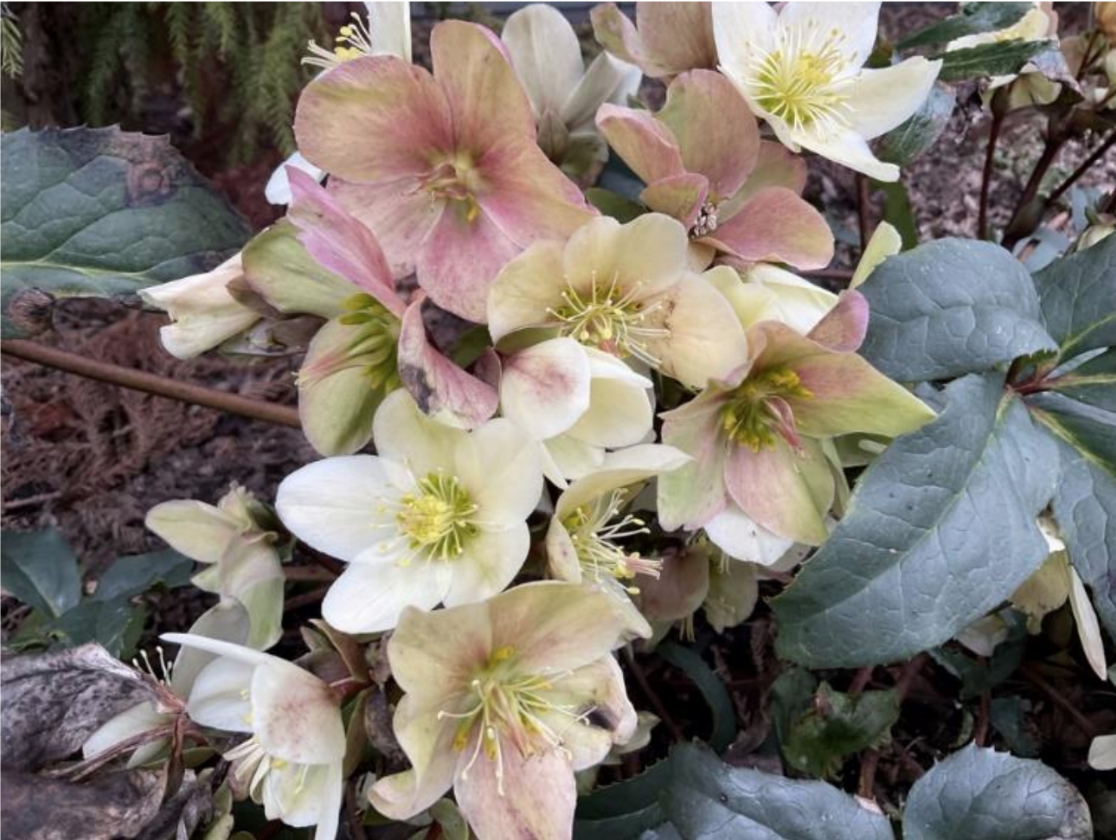
‘Champion,’ from the Gold Collection of hybrids. Loretta Fritz photo
By Loretta Fritz
When visitors are wandering around our lower garden area, it’s almost inevitable that someone will point and ask, “What is that plant?”
When I tell them that it’s a hellebore, I can spot the skepticism in their reply, “Really?” Yes, really. It’s a Corsican hellebore that ‘volunteered’ to grow in a most inconvenient (for me) location, but where it seems extremely happy! A second one has taken up residence in pea gravel behind our house.
Late winter/early spring is prime hellebore season, and most types grow well in our climate. When most of us think of hellebores, however, we picture the beautiful hybrids of Helleborus niger (Christmas Rose) and Helleborus orientalis (Lenten Rose).
They are widely available in a spectacular array of flower shapes and colours, hardy, easy to grow and care for, and deer resistant. They’re also relatively small (under 18” tall and wide) and elegant looking, making them a popular choice for small landscapes and containers.
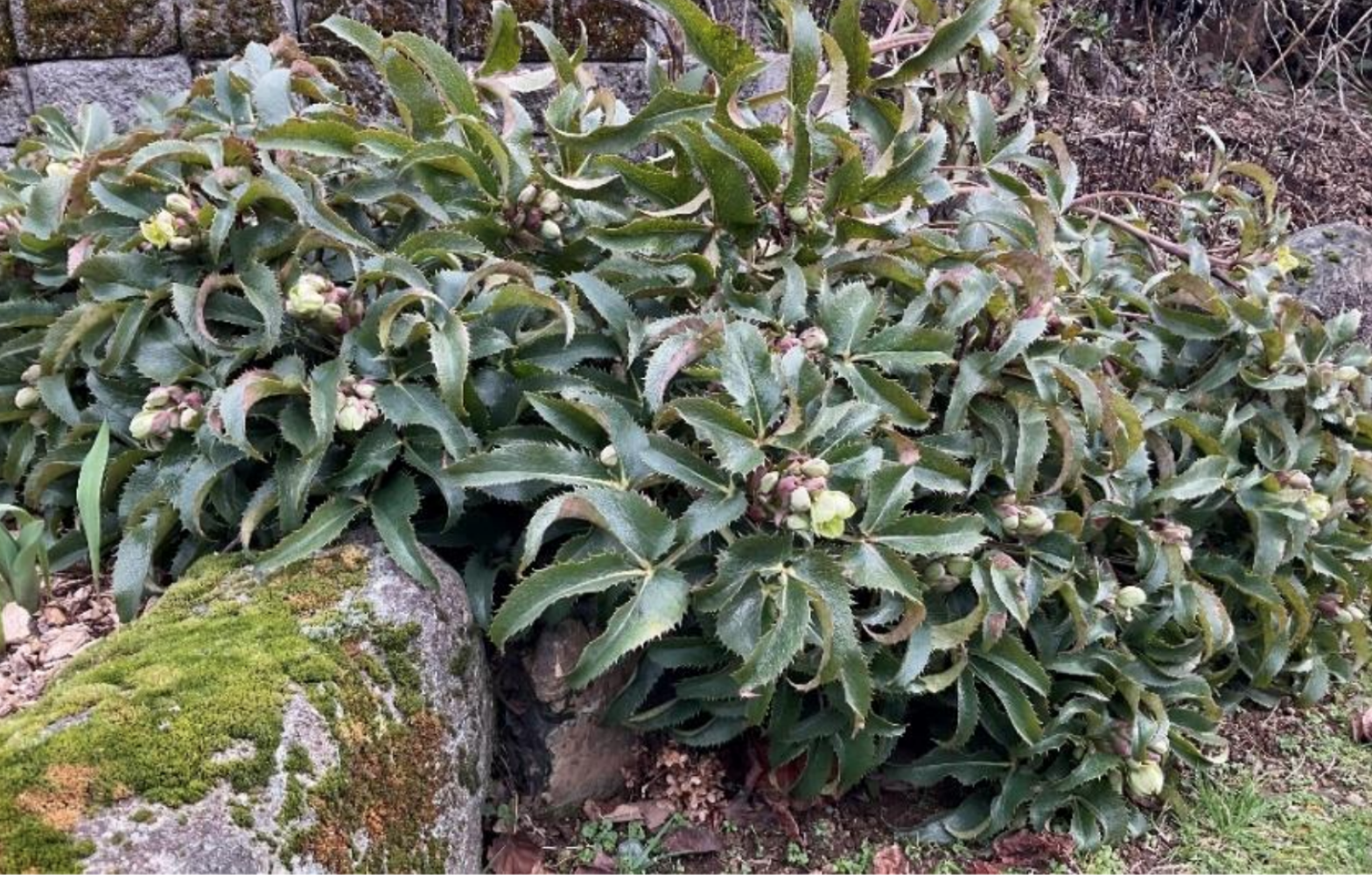
Large Corsican hellebore in full bud. Loretta Fritz photo
Corsican hellebore (H. argutifolius), by comparison, is huge and unrefined, growing 2–3’ tall by 4–5’ wide. Stems are up to 1” in diameter, flower clusters can comprise 25-30 individual blooms (yellow green), and the leaves (blue green) are divided into three spiny leaflets that can reach 6”–8” long. The plant is singularly impressive in full bloom but remains eye catching year-round.
Online resources suggest that, like other hellebores, Corsican hellebores do best in partial shade, average to evenly moist conditions with good drainage, and rich soil. Mine have opted for full sun, poor, rocky soil/gravel, and little to no supplemental water. Still, they appear to be thriving and are welcome additions to the yard.
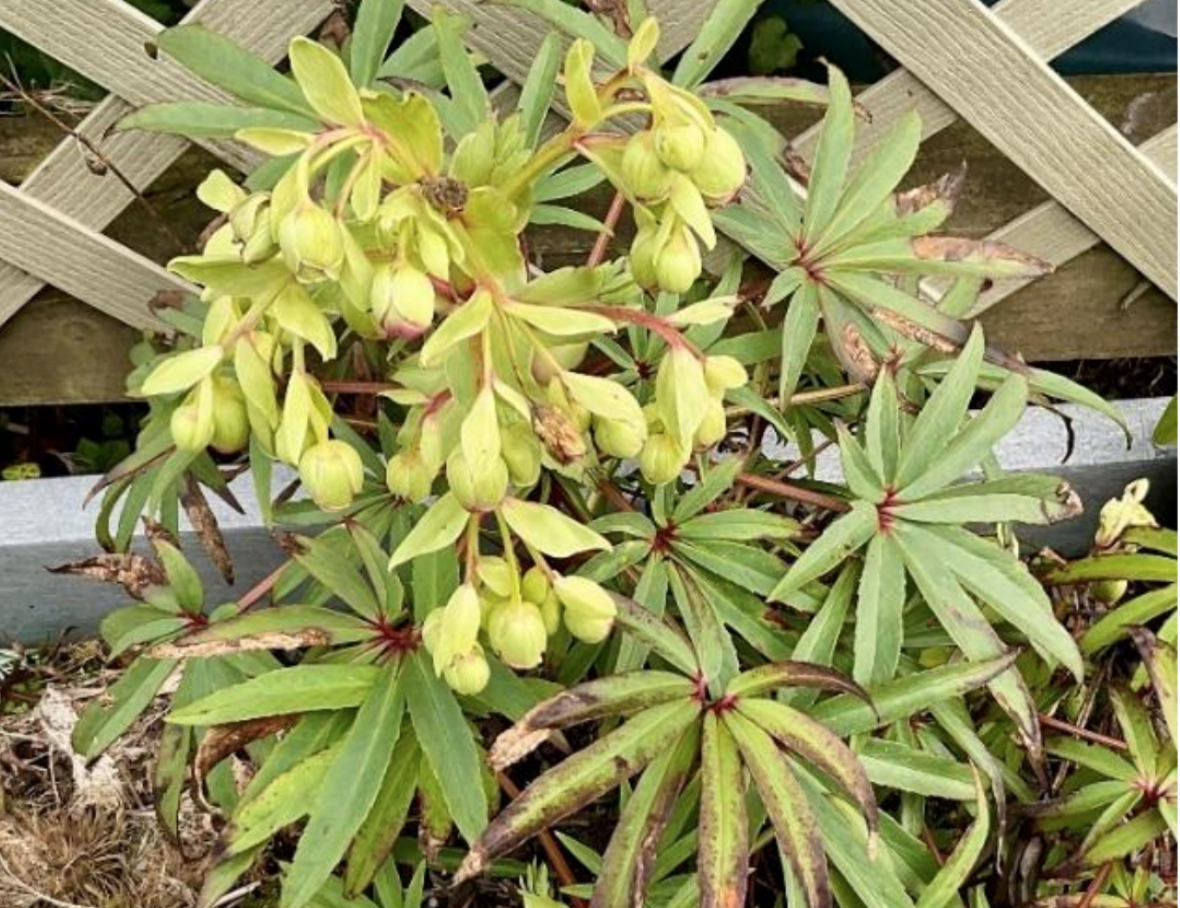
Stinking hellebores are noted for their comparatively refined leaves. Loretta Fritz photo
Another species hellebore worth noting is H. foetidus, commonly called stinking hellebore. It, too, is evergreen and typically grows 1’–2’ tall and wide. Especially notable are its drooping clusters of bell-shaped, chartreuse flowers edged in red and the dark green, deeply cut foliage.
Contrary to what the common name implies, the plant does not stink as a matter of course. Rather, it is the smell from bruised flowers and foliage that many people find unpleasant. This hellebore is lovely and shouldn’t be ignored just because of its unfortunate name. It should simply be sited where it is less likely to be damaged.
A final reason to love and plant hellebores: They produce copious amounts of pollen, helping bees and other pollinators get through the winter.