Japan’s gardens in winter
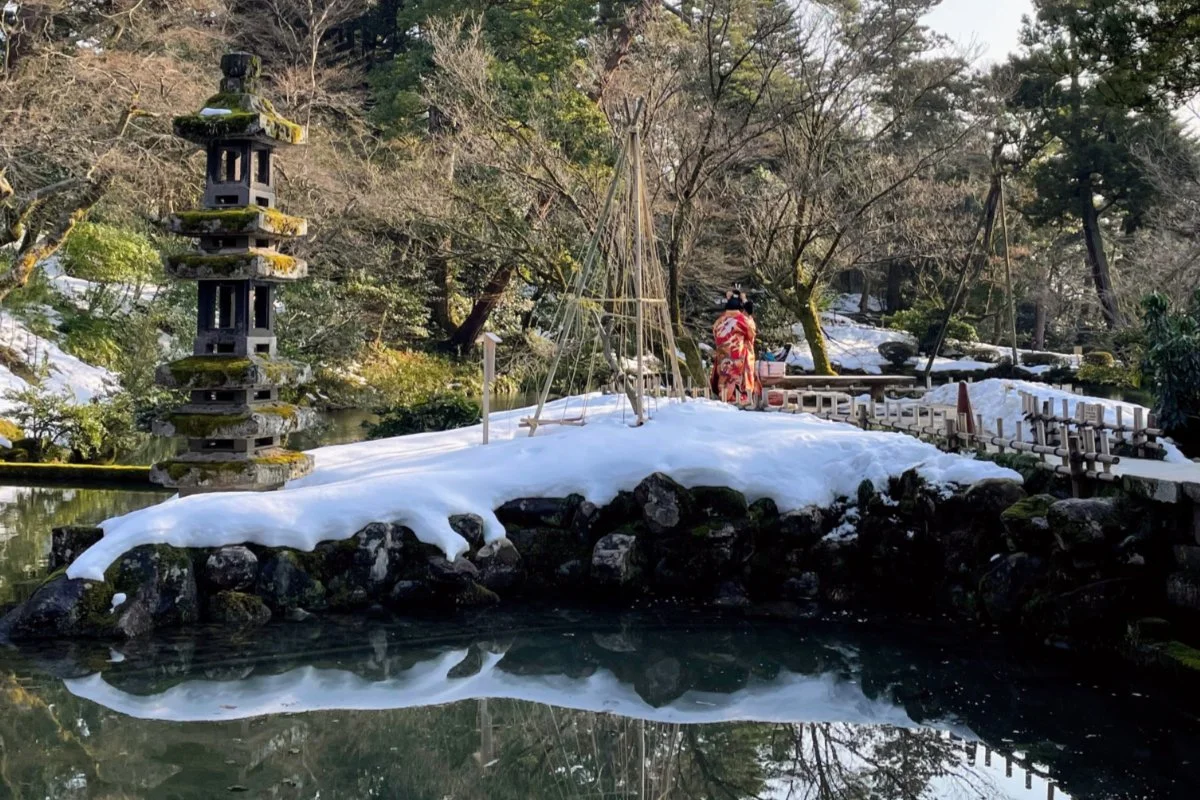
Kenroku-en in Kanazawa, on the west coast of Japan.
By Heather H.
Last year, at just about this time I was embarking on a three-month vacation/journey through Japan. No fixed itinerary, just a list of interesting destinations, and a desire to get to know Japanese culture up close.
At the top of my list were three of Japan’s most highly rated traditional Japanese gardens – Koraku-en, Retsurin and Kenroku-en and the Adachi Art Museum Garden.
I soon discovered the Japanese love of nature and horticulture runs very deep - in history, belief and practice.
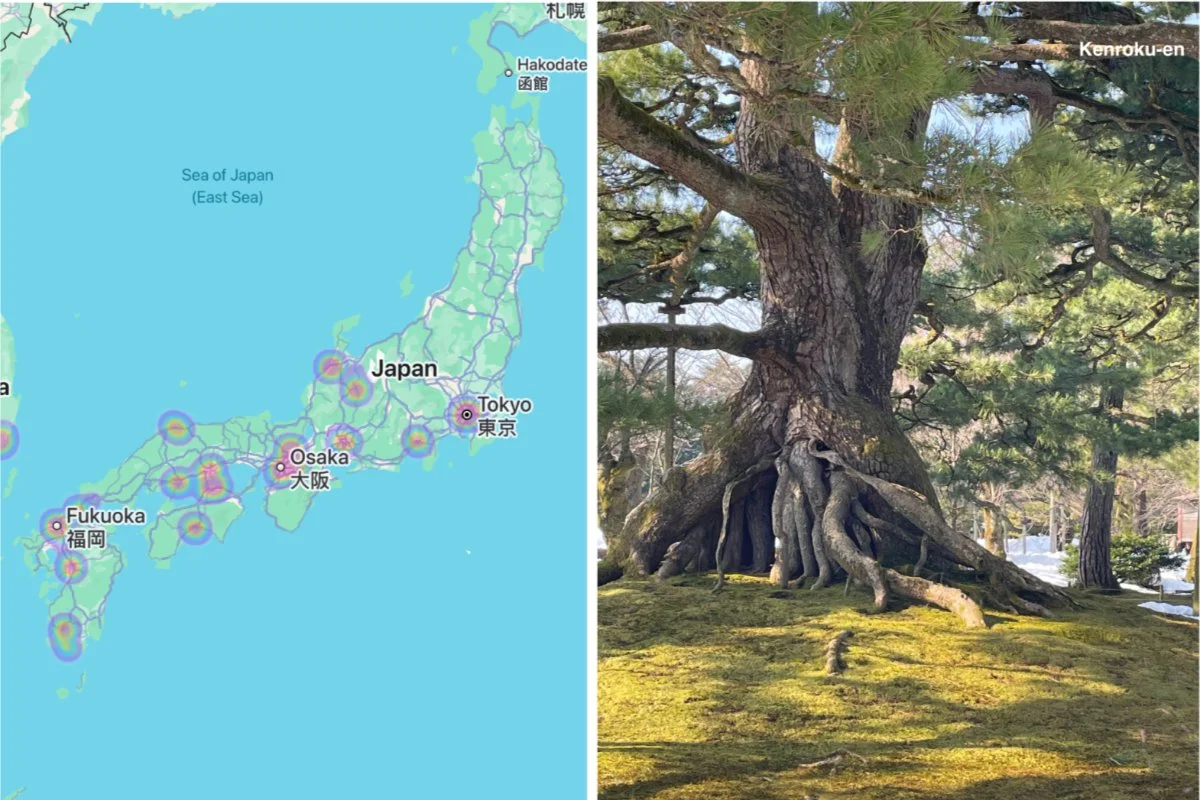
A map of the areas visited and a massive pine tree from Kenroku-en in Kanazawa.
The evidence was everywhere – in their centuries-old traditional gardens, considered national treasures, but also in their reverence for the natural world: trees, rocks and water.
Shintoism honours ancient trees in public places with garlands of rice straw to remind us they are spiritual spaces. I witnessed it in the Buddhist temple gardens with their carefully raked dry landscapes, meticulous moss gardens, the paths and halls maintained by monks as a daily meditation practice.
This appreciation of nature is more broadly expressed through traditional art forms, such as ikebana, suiseki and bonsai. Other examples include the festivals that mark the passing seasons, the most celebrated and loved being the sakura flowering each spring.
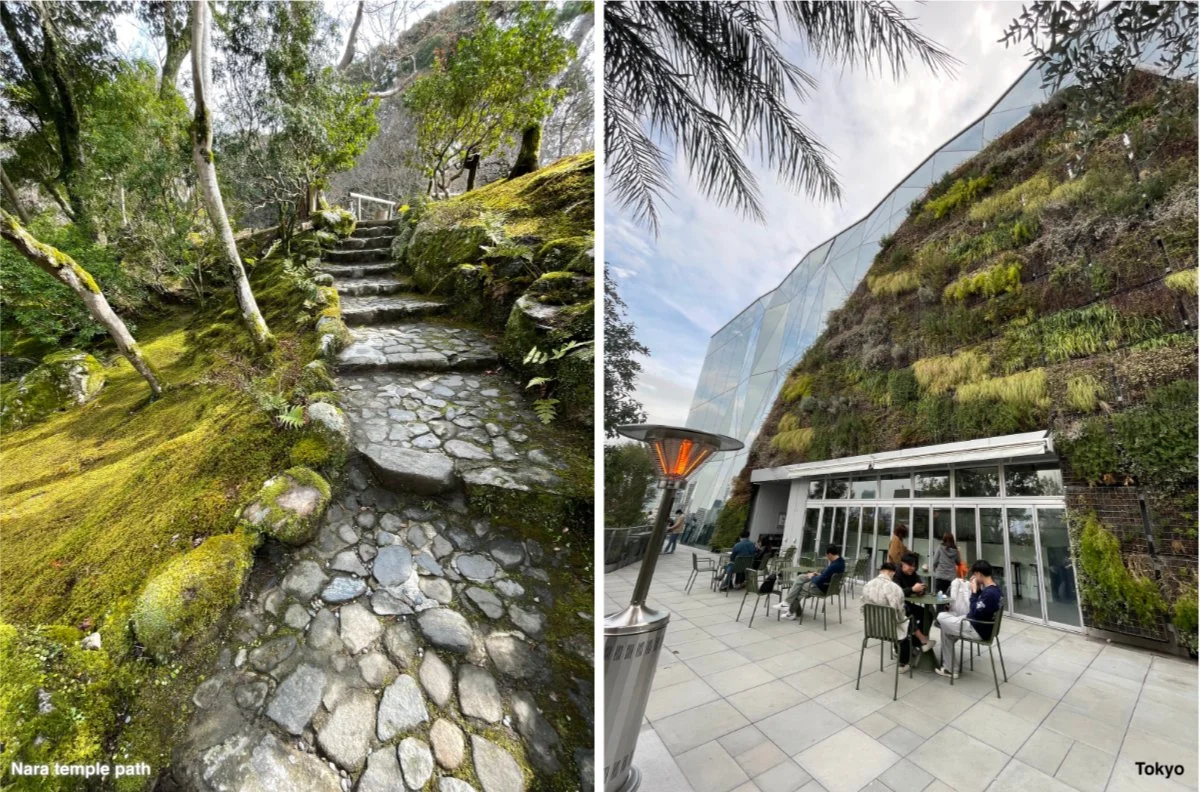
A Nara temple path, left, and an intricate green wall in Tokyo.
I absolutely delighted in the wide range of gardens and landscaping I saw throughout Japan, from the tiny gardens in the spaces adjoining homes and businesses, to the urban oases I found in both Tokyo and Osaka – multi-storeyed gardens built into the design of modern infrastructure, intricate and imaginative green walls, the massive cinnamon camphor, zelkovas and gingkos spreading their huge canopies on castle grounds, the botanical gardens, the ubiquitous temple gardens and Shinto shrines around every corner.
Though my travel occurred from January through March, a time when our gardens are largely brown and dormant, I found there were subtle and strategic touches of colour in the Japanese gardens, from the abundant camellias, winter kales and early-flowering trees such as witch hazel and flowering plums to the ever-present nandinas (heavenly bamboo).
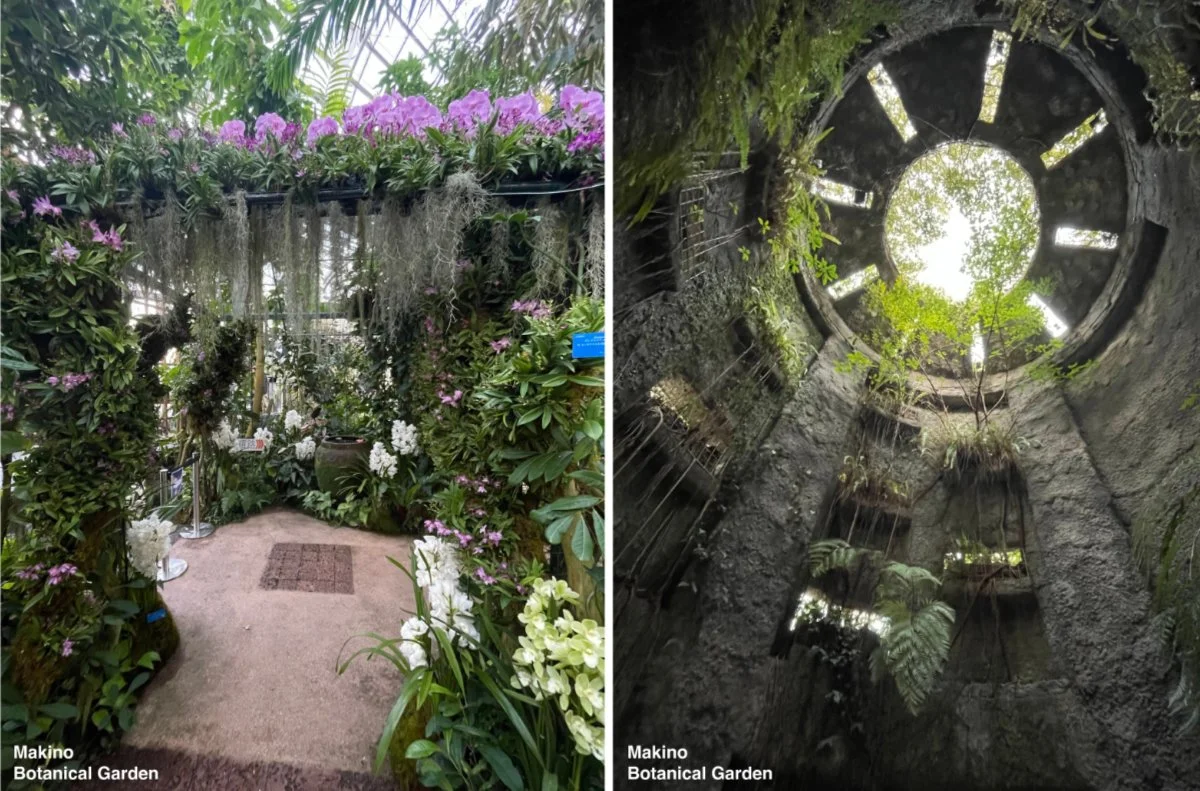
Two beautiful views from Japan's Makino Botanical Garden.
Traditional Japanese gardens are carefully designed according to aesthetic and spiritual principles developed over the centuries. Historical examples strictly adhere to their original designs, often hundreds of years old, all featuring similar elements – water, rocks, gravel and evergreen plants.
While flowering plants and shrubs, like camellias, azaleas, wisteria, irises and peonies are appreciated and included in Japanese gardens, they are of lesser significance. Trees, and pines especially, are the stars of the garden. Japanese gardens are meant to be appreciated in all four seasons.
Here is a little taste of what I saw – from the gardens on my list.
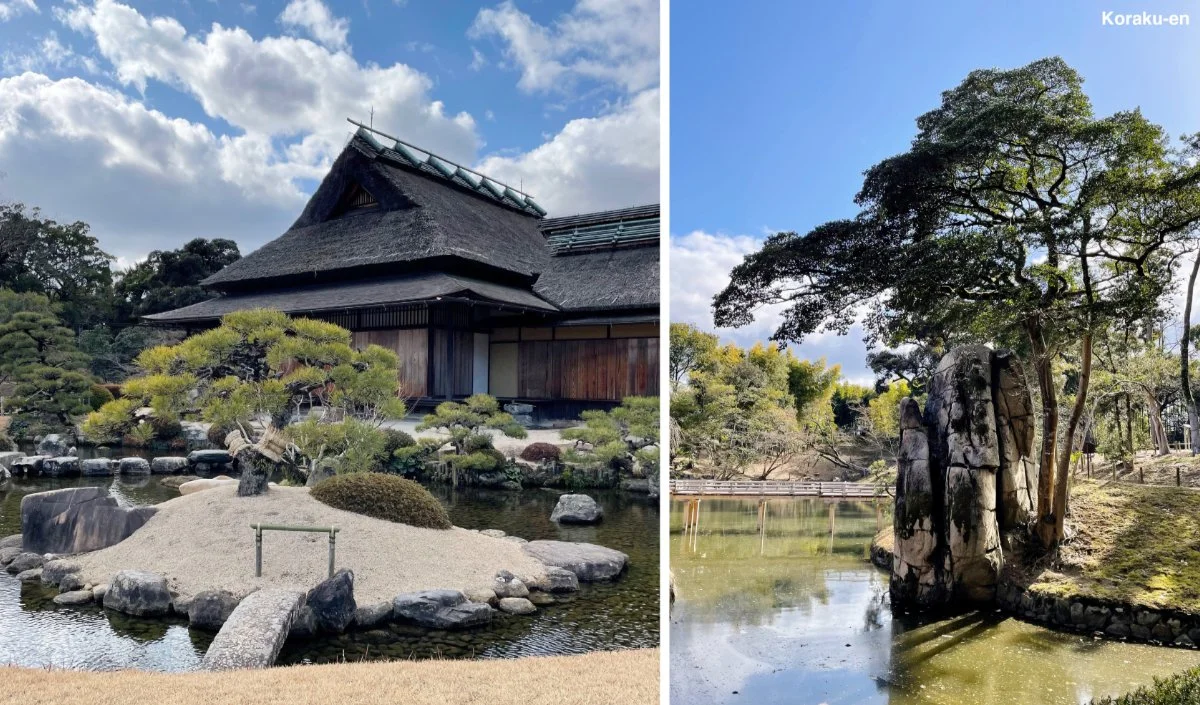
Located in Okayama, Koraku-en is more than 300 years old.
Koraku-en, located in Okayama, is more than 300 years old and has been maintained true to its original appearance. This is a strolling garden, with a winding path joining ponds, lawns and teahouses. Along the path are viewing points, stops with the best vantage point for appreciating the garden’s design.
While we were visiting Koraku-en we were able to take in a special suiseki display at the gardens. Suiseki are natural stones appreciated for their shape and distinctive characteristics. Thought to resemble natural landscapes and other evocative forms, display is everything with suiseki, and the stones are often set on a hand-carved wooden base or set into a tray of sand.
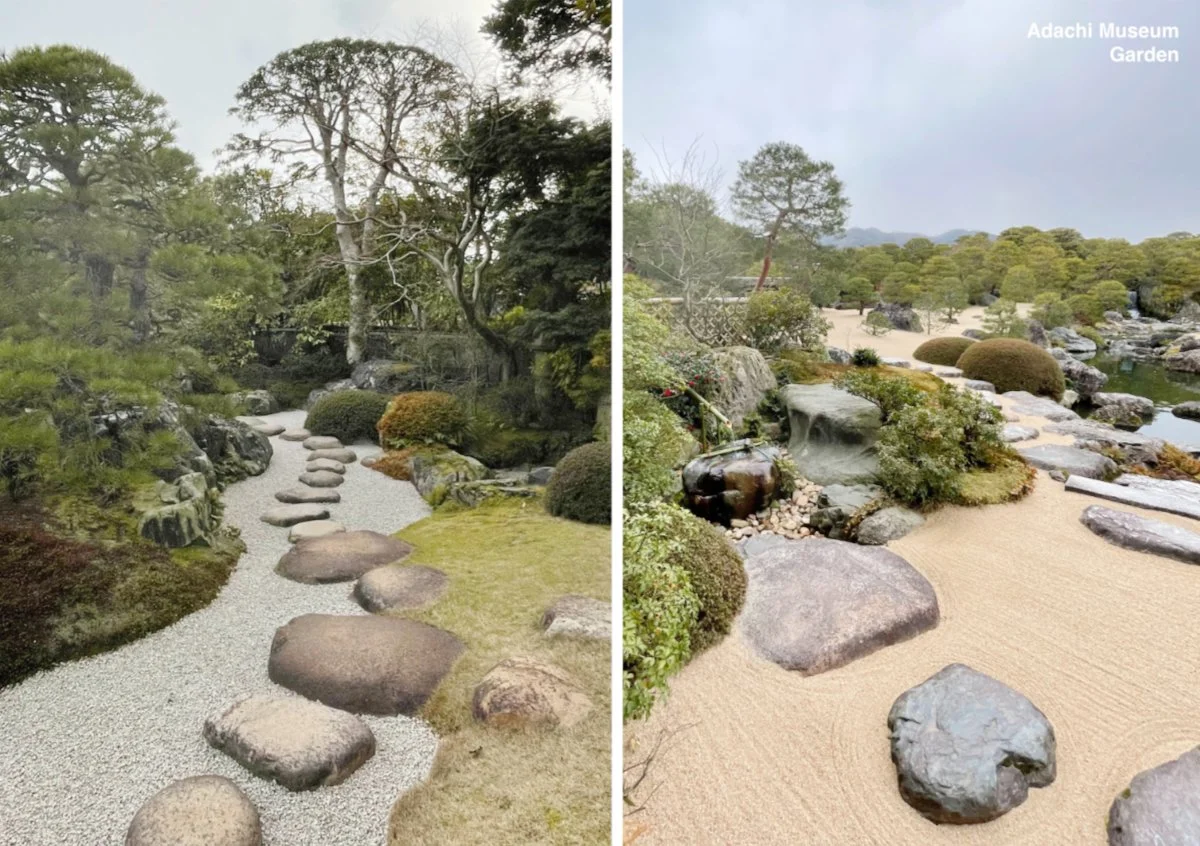
The Adachi Museum Garden.
Adachi Museum of Art, located near the small village of Yasugi, has been ranked No. 1 out of 1,000 places since 2003 by the Journal of Japanese Gardens. This is an interesting garden that can only be seen from inside the museum building, which is cleverly designed to wrap around and through the garden like a winding path – the garden is viewed in galleries through large glass windows.
This is a new garden, privately owned and established by Adachi Zenko around 1970 when fulfilling his dream to share his art collection with the world. It’s an amazing garden – not a leaf out of place!
Ritsurin, in Takamatsu on Shikoku Island, is another strolling-style garden famous for its 1,000 sculpted pines and especially the Japanese black pine.
Kenroku-en is located on the west coast of Japan in Kanazawa, an area that receives heavy snow during the winter so all the trees and bushes both in the garden and around town are protected with attractive woven wrappings and supports to prevent snow damage.
Kenroku-en is noted for it’s beauty across all seasons and especially winter, and I have to agree. The remains of a large dump of snow in the week previous to our visit left the garden with just the right amount remaining…the paths were all cleared and lots of green was peaking through the melting snow.
In all I visited more than 26 named gardens and made countless other garden discoveries along the way from Kagoshima at the southern tip of Kyushu to Tokyo. Japan is much bigger then it looks on a map – roughly 2,900 kilometres driving distance from end to end. Now I have done the first 1,500 km, I can't wait to go back to do the next leg north of Tokyo to Hokkaido.
Enjoy the photos!